Verdict #6 in a series of 7. Previous: Verdict #5 — Secrets.
The Claim
Thiel’s argument in Chapter 9:
- Computers are good at specific tasks, not substituting for whole humans.
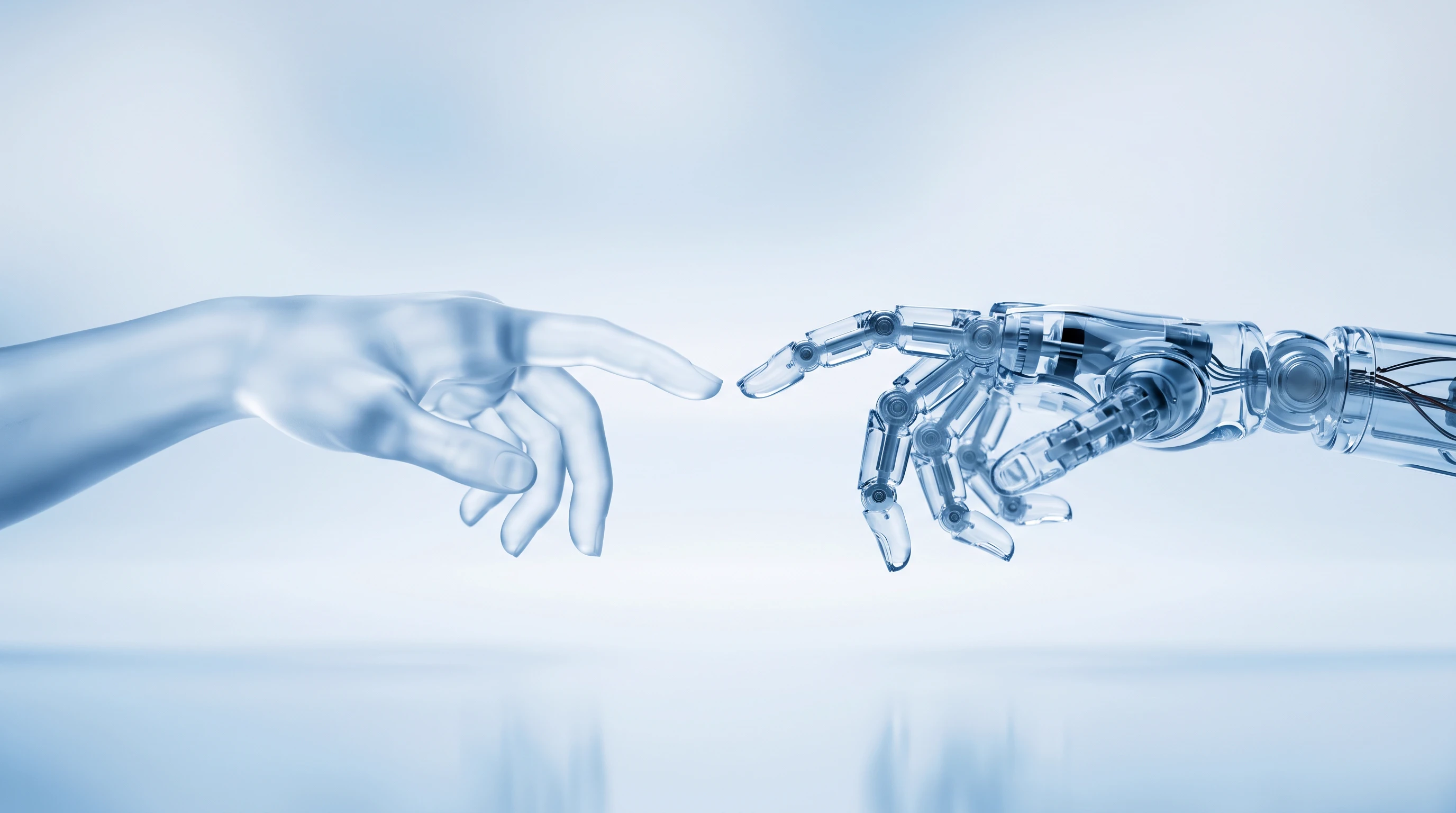
- The most valuable model is complementarity — humans and machines working together, each doing what they’re best at.
- He distinguishes “globalization-style” substitution (replace people with cheaper labor or machines) from “technology-style” complementarity (augment human capabilities).
- Palantir is the flagship case: AI processes big data, human analysts make the judgment calls.
人机互补 — “Man + Machine Complementarity”
Thiel also predicts that AGI is not coming anytime soon, and that human “judgment” and “intention understanding” will remain uniquely valuable.
Evidence Strength: 3/5
What Thiel gets right
- The substitution vs. complementarity distinction is excellent. This is genuinely one of the sharpest conceptual tools in the book. It explains why some technologies create jobs (CAD software → more engineers needed) while others destroy them (automated assembly lines).
- Palantir is a real, working example. AI processing + human judgment has genuine results in national security and fraud detection.
- His caution about “AI will replace everything” was rational in 2014. Against the hype cycle of the time, his skepticism was well-calibrated.
The major problems
1. Linear extrapolation from 2014 capabilities.
In 2014, LLMs didn’t exist. GPT-3 was six years away. Thiel’s claim that “computers can never understand human intention” looks increasingly questionable in 2026, when modern LLMs demonstrate considerable — if imperfect — intention comprehension.
2. The rate of AI progress surprised everyone — including Thiel.
以当下的技术能力推断未来 — “Projecting current capabilities onto the future”
He implicitly used linear extrapolation. The actual trajectory has been exponential. What looked like a safe “human forever” boundary in 2014 is now contested territory.
3. Palantir = conflict of interest.
Using his own company as the central case study creates obvious bias. Palantir’s model works for national security investigations — this doesn’t prove it’s universally applicable.
4. “Humans will always have an edge” is an untestable claim.
Thiel provides no mechanism for why human judgment will never be surpassed. It’s a belief, not an argument.
Counterexamples
The LLM Wave (2022–2026)
Customer service, entry-level programming, basic translation, content summarization — all areas where Thiel assumed “human judgment” would remain essential, now being systematically automated. The boundary between “complementarity” and “substitution” is moving fast.
Autonomous Vehicles
Thiel described Google’s self-driving project as a complementarity example (“car handles driving, human monitors the road”). By 2026, Waymo’s robotaxis operate with zero human occupants in multiple cities. The trajectory is toward substitution, not complementarity.
Algorithmic Curation
TikTok’s “For You” page — entirely AI-driven, no human editors. Users don’t care that recommendations come from algorithms rather than human judgment. Thiel’s assumption that humans value “human curation” turns out to be false in many contexts.
Net Judgment: Trust 60%
Thiel’s “substitution vs. complementarity” distinction remains one of the sharpest ideas in the book. It’s a genuine analytical contribution.
But his specific prediction — “computers will always complement rather than replace” — was overtaken by events. The boundary is moving far faster than he anticipated.
更准确的表述应该是:在一些领域计算机补充人类,在另一些领域计算机替代人类,而且这个分界线在快速移动 — “A more accurate statement: in some areas, computers complement humans; in others, they replace — and the boundary is moving fast”
Net takeaway: Use Thiel’s complementarity/substitution framework as an analytical lens. Ask yourself: “Is this industry in a complementarity phase or a substitution phase? How will that shift in 3 years?” But don’t assume any human role is “naturally safe.”
Next in this series: Verdict #7 — The Founder’s Paradox